Currency
EUR

Naše úsně

OUR LEATHERS - Three families we craft from
Lush, Resina, Libra

We use all three for the same reason – we were looking for quality Italian grain leathers whose transparent origin and technical properties would guarantee us high quality, lasting durability, and a touch that feels good in your hands. By combining these three technically very similar leathers, we were able to build the range of colors we wanted to offer you – and one we're genuinely proud of.


Mastrotto · Italy

Lush

Genuine full-grain cowhide leather (pieno fiore) from the Gruppo Mastrotto tannery in Vicenza. Semi-aniline finish, velvety hand, European-sourced raw materials.

“Lush, a full-grain cowhide nappa of European origin, is a union of elegance and naturalness. The semi-aniline finish gives the leather a natural look and a soft hand that invites you to touch it.”

— Gruppo Mastrotto

Key specifications

Click a row for an explanation. Not because we want to overcomplicate leather. But because the gap between genuine grain leather and marketing jargon tends to be wider than it first appears.

Raw materialCowhide leather
Our choice
  • Cowhide leather
Other options we don't use for Lush
  • Sheepskin leather
  • Calfskin leather
  • Goatskin leather

Cowhide leather has enough thickness and strength for a backpack that carries a laptop, books, a water bottle, and the usual daily chaos. Finer leathers can be beautiful on handbags or garments, but a city backpack also needs durability.

Origin of raw materialsEuropean
Our choice
  • European
Other options we don't use for Lush
  • South American
  • Asian
  • African

European origin means better traceability and stricter standards for the source of the raw material. For Lush, the tannery states it directly on the technical data sheet.

Leather typeGenuine grain (pieno fiore)
Our choice
  • Genuine grain — pieno fiore / full-grain
Other options we don't use for Lush
  • Corrected grain
  • Split leather
  • Reconstituted / bonded leather
  • PU “leather” — plastic on a textile backing

Genuine grain leather is the top layer of the hide with its natural grain. It doesn't pretend to be perfect. That's exactly where its value lies: the pores, subtle variations, and living surface aren't a flaw, but proof of the material.

Corrected grain leather has its surface unified by sanding and a final finish. It can look very clean, but part of the natural grain is lost in the process.

Split leather is the lower layer separated from the grain.

Reconstituted, or bonded, leather — often labeled bonded leather — is a mix of leather scraps and a binder. It looks like leather, but its lifespan comes nowhere near genuine grain leather.

PU “leather” isn't genuine leather at all.

Thickness1.1–1.3 mm

A thickness suited to a daily city backpack: enough to hold its shape and handle everyday loads, but not so heavy that the backpack becomes needlessly bulky.

Hide size1.8–2.2 m²

According to the technical data sheet, individual hides average 19–24 sf, roughly 1.8–2.2 m². On the finished backpack you only see the final shape, but the choice of the right part of the hide is decided long before stitching begins.

TanningChrome
Our choice
  • Chrome tanning
Other options we don't use for Lush
  • Vegetable tanning
  • Combination tanning

Tanning is the process that turns a raw hide into a durable material. Chrome tanning gives leather softness, stability, and better usability for everyday wear. Vegetable-tanned leather has its place, but it darkens and stiffens more noticeably and behaves differently. For a city backpack meant to be comfortable, flexible, and practical, chrome tanning is the logical choice.

DyeingThrough-dyed

Dyed through means the color isn't only on the surface. The leather is dyed across its full thickness, so everyday wear at an edge won't reveal a lighter interior.

Surface finishSemi-aniline
Our choice
  • Semi-aniline
Other options we don't use for Lush
  • Aniline
  • Pigmented

Aniline leather is the most natural, but also the most delicate. Pigmented leather is the most resistant, but often looks flat/artificial.

Semi-aniline is a good compromise: it lets the grain of the leather show through, but adds a thin protective layer for everyday life.

Aniline is a type of transparent dye. It doesn't cover the leather like wall paint; rather, it dyes it and lets its natural structure stand out. That's why aniline leathers look vivid, but pick up stains more easily.

Pigmentation is a covering layer with a colored pigment. It can even out the surface and increase resistance, but when there's too much of it the leather starts to look flat, closed off, and sometimes even plasticky. A semi-aniline finish sits between these two worlds: it protects, but doesn't hide.

HandSoft, velvety

Lush has a quiet, warm, velvety surface with no plasticky sheen. It's exactly the kind of leather where it makes sense to talk about the hand, not just the color.

Supplier certifications

These certifications aren't here for decoration. They're assurances that this isn't some random leather from an unknown source, but a material from a specific tannery with traceable processes.

PDF Gruppo Mastrotto — Lush, official technical data sheet
Includes the complete mechanical tests, certifications, biobased content, and care.
  • Leather Working Group — Gold Rated. The highest LWG rating level for a tannery's environmental practices.
  • UNI EN ISO 9001:2015 — quality management system.
  • UNI EN ISO 14001:2015 — environmental management system.
  • USDA Biobased content: 65–75% biobased content according to the technical data sheet.
  • Carbon Neutral (Scope 1 and 2) — carbon-neutral production within the tannery's direct emissions.
Mechanical tests and colorfastness (expand for details)

This part is for those who want to see the numbers. Not marketing adjectives. The values below come from the official Lush technical data sheet.

Property Standard Guaranteed
Tear resistance UNI EN ISO 3377-2 ≥ 35 N
Tensile strength UNI EN ISO 3376 ≥ 10 N/mm²
Flex resistance (50,000 cycles, dry) UNI EN ISO 5402 No damage
Grain strength (distension) UNI ISO 3379 ≥ 7 mm
Finish adhesion (dry) UNI EN ISO 11644 ≥ 2.5 N/cm
Colorfastness — rubbing (100 cycles, dry) UNI EN ISO 11640 Gray scale ≥ 3/4
Colorfastness — rubbing (20 cycles, wet) UNI EN ISO 11640 Gray scale ≥ 3
Colorfastness — artificial light (5,300 kJ/m²) UNI EN ISO 105B02 Gray scale ≥ 4
Colorfastness — water drop (after 16 h) UNI EN ISO 15700 Gray scale ≥ 3
Crockmeter (15 cycles, dry) UNI EN ISO 20433 Gray scale ≥ 3
Crockmeter (10 cycles, wet) UNI EN ISO 20433 Gray scale ≥ 3
Taber abrasion (CS10, 500 g, 100 cycles) UNI EN ISO 17076-1 Gray scale ≥ 3
Martindale abrasion (9 kPa, 1,600 cycles) UNI EN ISO 12947-1 and 2 Gray scale ≥ 3

What do “Gray scale ≥ 3” and “Gray scale ≥ 4” mean?

The gray scale is the standard for rating color change. The scale runs from 1 to 5: five means no visible change, one means a pronounced change.

A value of ≥ 3 means a slight, acceptable change. A value of ≥ 4 means a very small change that you'd normally barely notice.

Care recommendations

  • Don't leave the backpack in direct sunlight for long periods.
  • Don't dry it on a radiator, with a hair dryer, or near any other heat source.
  • For routine cleaning, a slightly damp cloth is all you need.
  • Wipe a stain away with a clean sponge or cloth. Don't rub hard.
  • Twice a year, we recommend a colorless cream for smooth nappa leather.
Our leather · Italy

Resina

Genuine full-grain cowhide leather (pieno fiore) from an Italian tannery. Semi-aniline finish with a resin protective layer, European-sourced raw materials.

“In appearance, hand, and technical properties, Resina is very similar to both Lush and Libra. The average customer wouldn't tell them apart when carrying or touching them. The reason we work with several tanneries is our effort to offer you the intended range of colors in leathers of the same quality and properties.”

— Jan Boruta, Co-founder & CEO Playbag

Products in this leather

Key specifications

Click a row for an explanation.

Raw materialCowhide leather
Our choice
  • Cowhide leather
Other options we don't use for Resina
  • Sheepskin leather
  • Calfskin leather
  • Goatskin leather

Cowhide leather has enough thickness and strength for a backpack that carries a laptop, books, a water bottle, and the usual daily chaos. Finer leathers can be beautiful on handbags or garments, but a city backpack also needs durability.

Origin of raw materialsEuropean
Our choice
  • European
Other options we don't use for Resina
  • South American
  • Asian
  • African

European origin means better traceability and stricter standards for the source of the raw material.

Leather typeGenuine grain (pieno fiore)
Our choice
  • Genuine grain — pieno fiore / full-grain
Other options we don't use for Resina
  • Corrected grain
  • Split leather
  • Reconstituted / bonded leather
  • PU “leather” — plastic on a textile backing

Genuine grain leather is the top layer of the hide with its natural grain. It doesn't pretend to be perfect. That's exactly where its value lies: the pores, subtle variations, and living surface aren't a flaw, but proof of the material.

Corrected grain leather has its surface unified by sanding and a final finish. It can look very clean, but part of the natural grain is lost in the process.

Split leather is the lower layer separated from the grain.

Reconstituted, or bonded, leather — often labeled bonded leather — is a mix of leather scraps and a binder. It looks like leather, but its lifespan comes nowhere near genuine grain leather.

PU “leather” isn't genuine leather at all.

Thickness1.4 mm

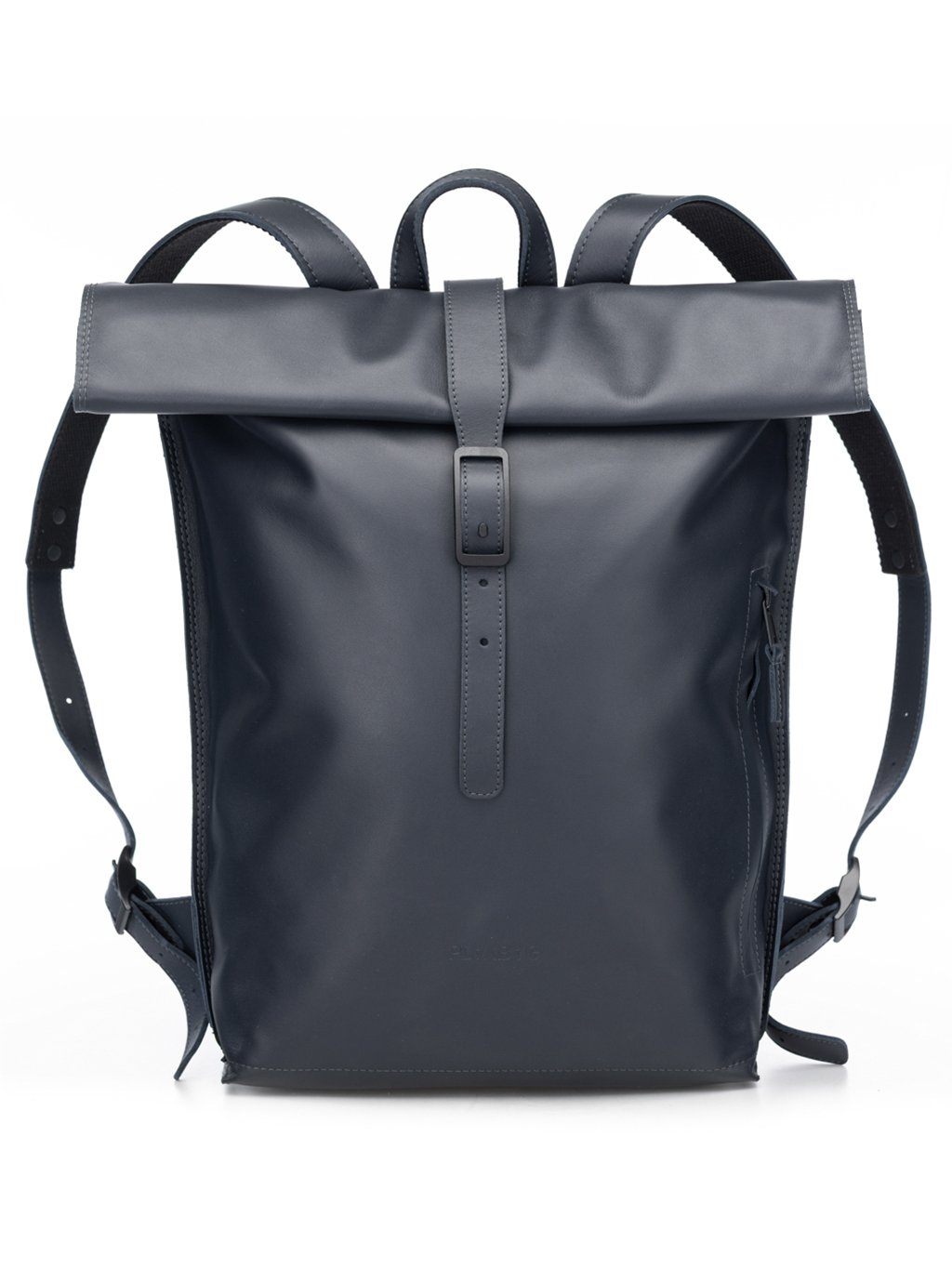
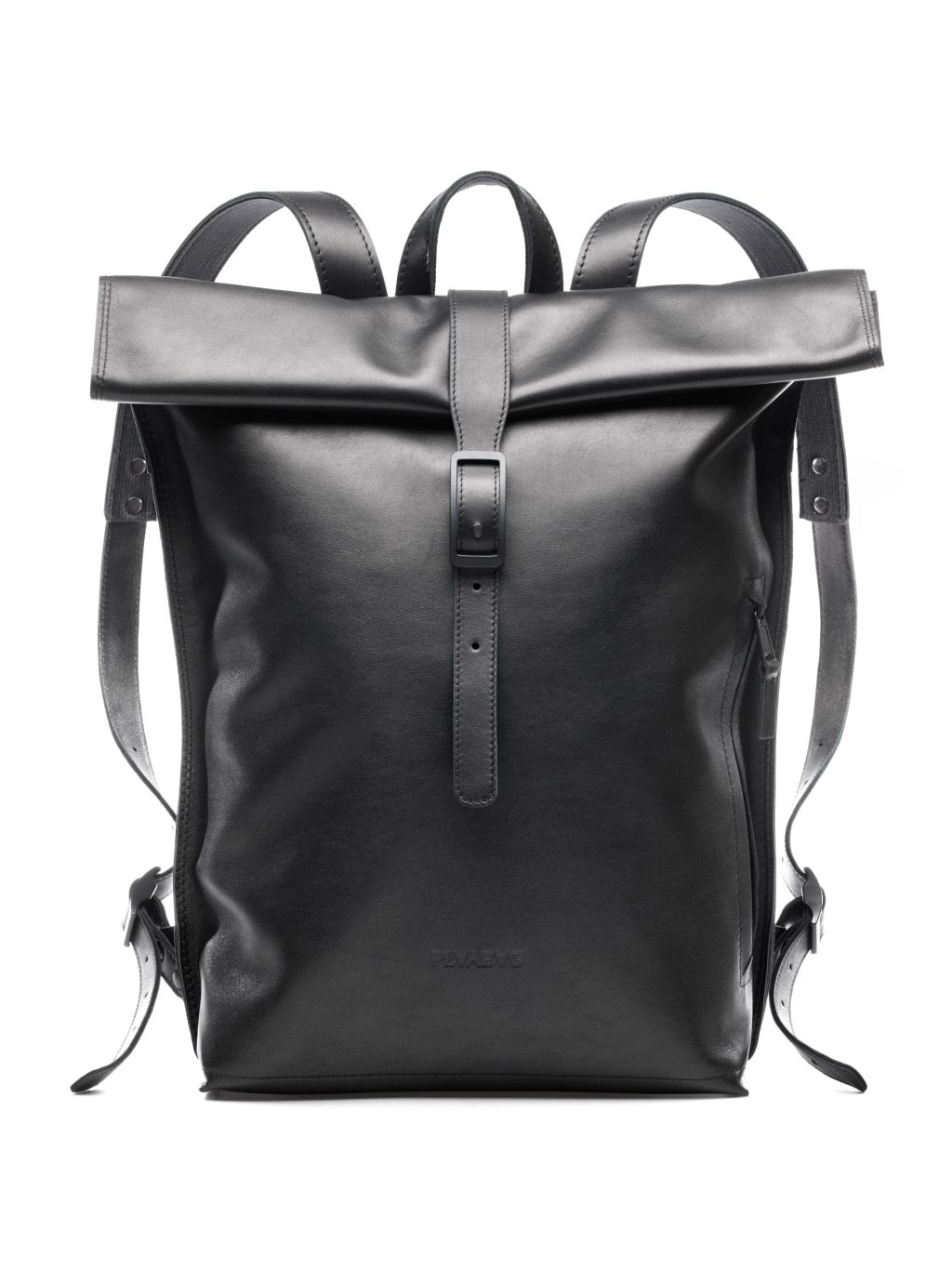
Slightly thicker than Lush. On the black version of the Delfin, it helps maintain a clean, firm look.

Hide size1.8–2.2 m²

Individual hides average 19–24 sf, roughly 1.8–2.2 m². On the finished backpack you only see the final shape, but the choice of the right part of the hide is decided long before stitching begins.

TanningChrome
Our choice
  • Chrome tanning
Other options we don't use for Resina
  • Vegetable tanning
  • Combination tanning

Tanning is the process that turns a raw hide into a durable material. Chrome tanning gives leather softness, stability, and better usability for everyday wear. For a city backpack meant to be comfortable, flexible, and practical, chrome tanning is the logical choice.

DyeingThrough-dyed

Dyed through means the color isn't only on the surface. The leather is dyed across its full thickness, so everyday wear at an edge won't reveal a lighter interior.

Surface finishSemi-aniline / resin
Our choice
  • Semi-aniline with a resin protective layer
Other options we don't use for Resina
  • Aniline
  • Pigmented

The Italian term “resina” means resin. It refers to the resin component of the final protective finish, applied over the aniline dyeing. The result is a leather that keeps its natural character but, thanks to the protective finish, more easily withstands everyday spills and wear.

Aniline leather is the most natural, but also the most delicate. Pigmented leather is the most resistant, but often looks flat/artificial.

Semi-aniline is a good compromise: it lets the grain of the leather show through, but adds a thin protective layer for everyday life.

HandSoft, velvety

Resina has a quiet, warm surface with no plasticky sheen. It's exactly the kind of leather where it makes sense to talk about the hand, not just the color.

Supplier certifications

We've requested the tannery's certificate. As soon as we receive it as a PDF, we'll publish it here to open, just as with Lush.

The PDF certificate is being added. It will be available as soon as the Italian tannery confirms it.

Care recommendations

  • Don't leave the backpack in direct sunlight for long periods.
  • Don't dry it on a radiator, with a hair dryer, or near any other heat source.
  • For routine cleaning, a slightly damp cloth is all you need.
  • Wipe a stain away with a clean sponge or cloth. Don't rub hard.
  • Twice a year, we recommend a colorless cream for smooth nappa leather.
Our leather · Italy

Libra

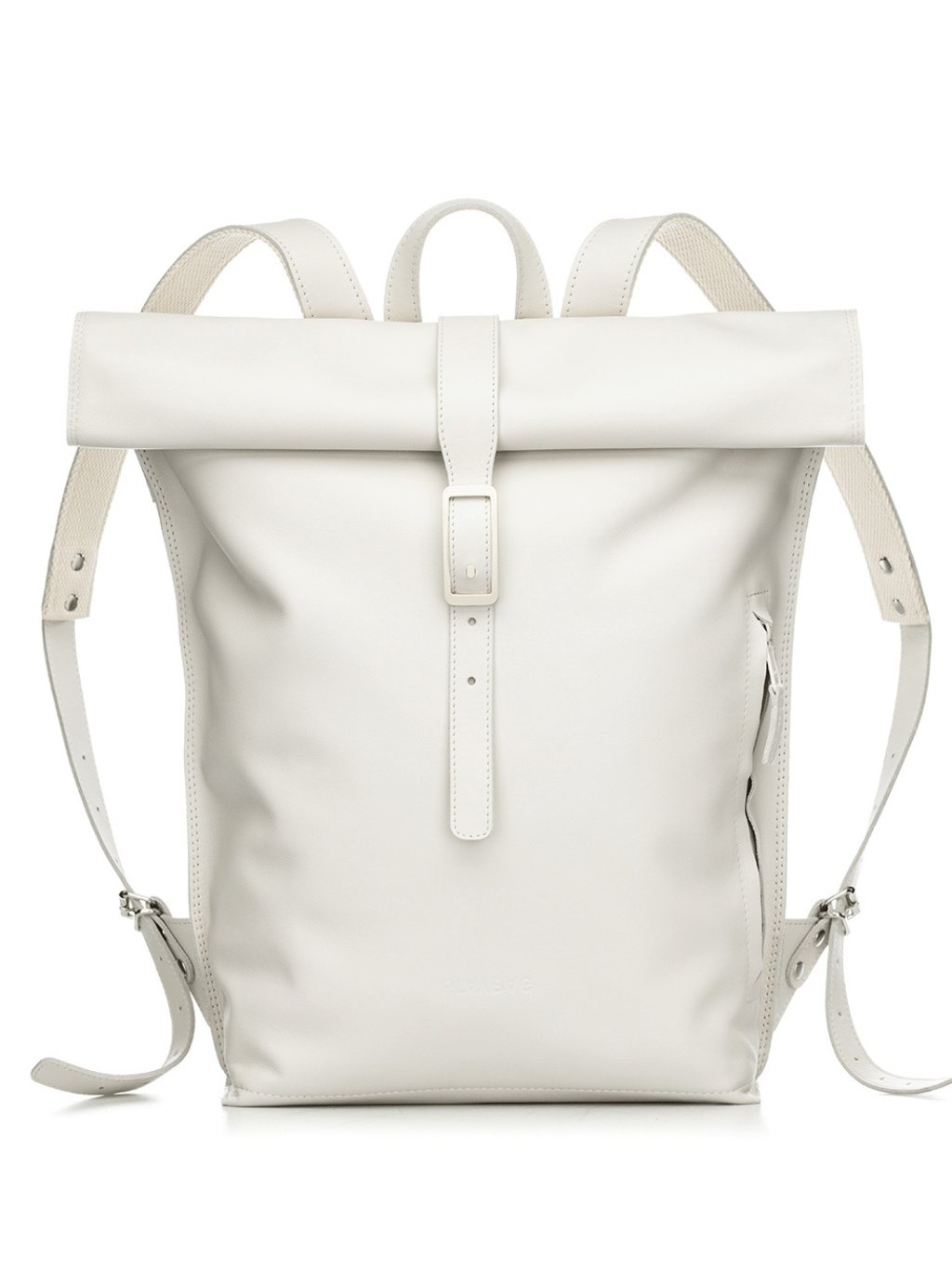
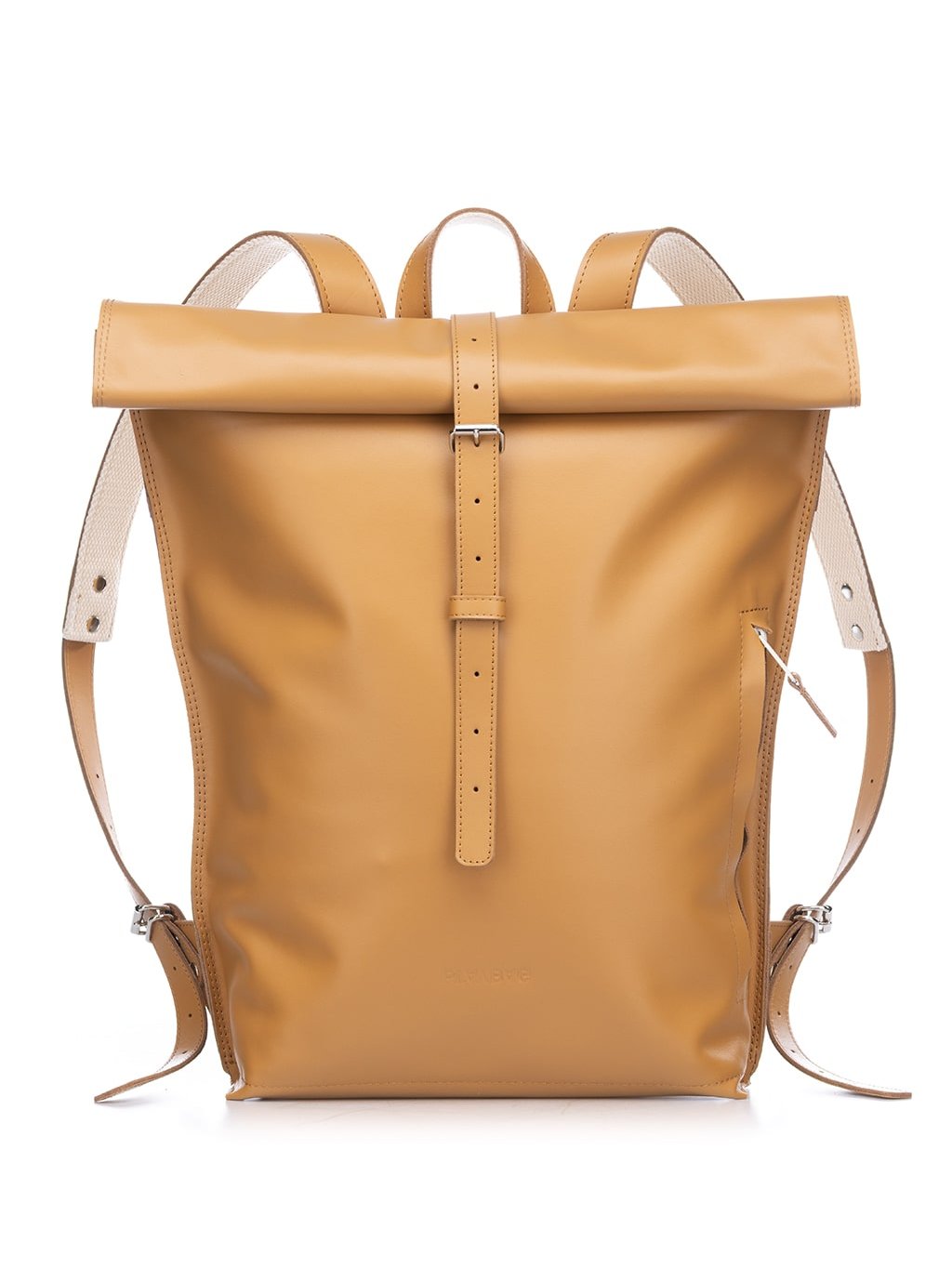
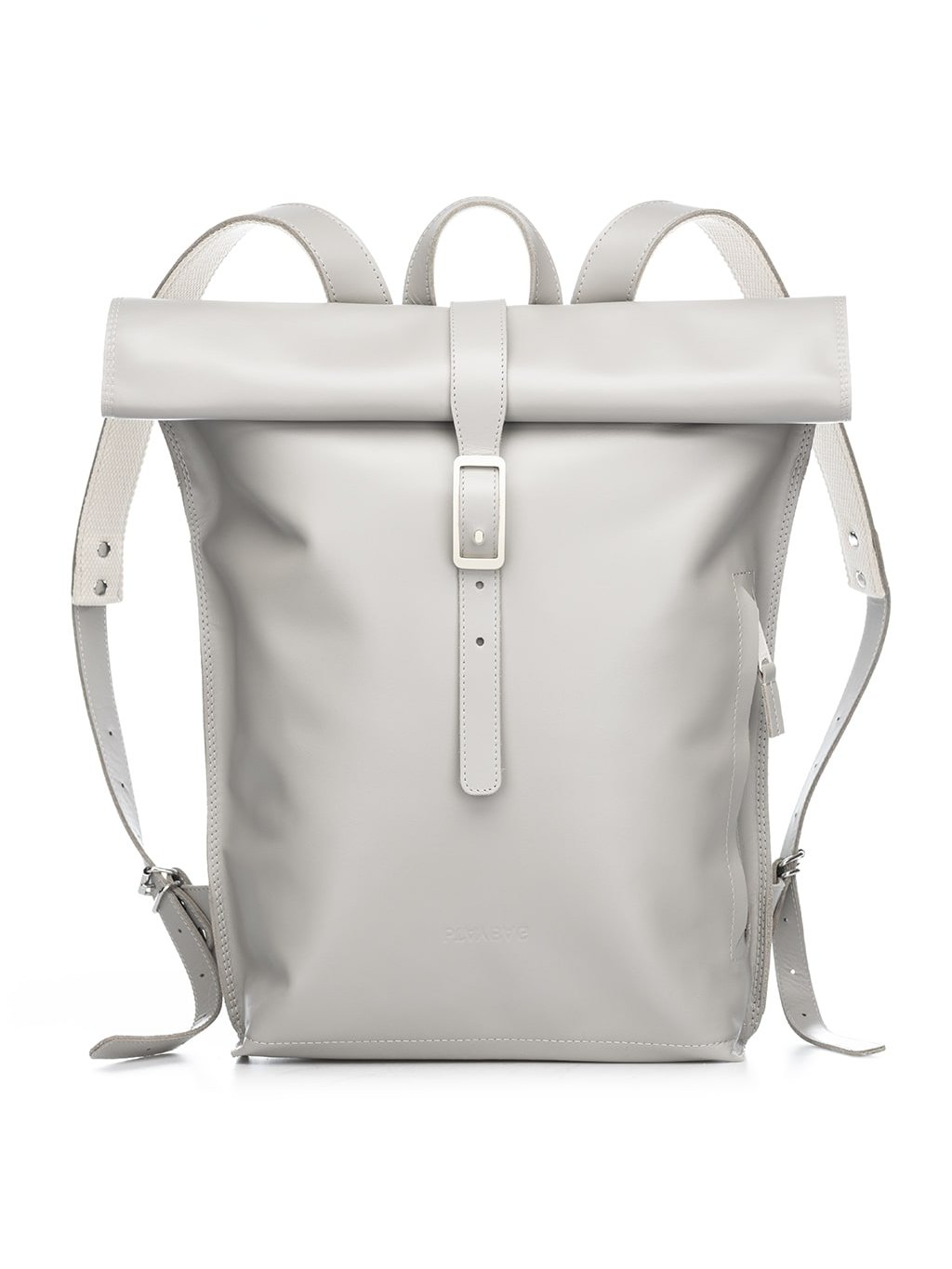
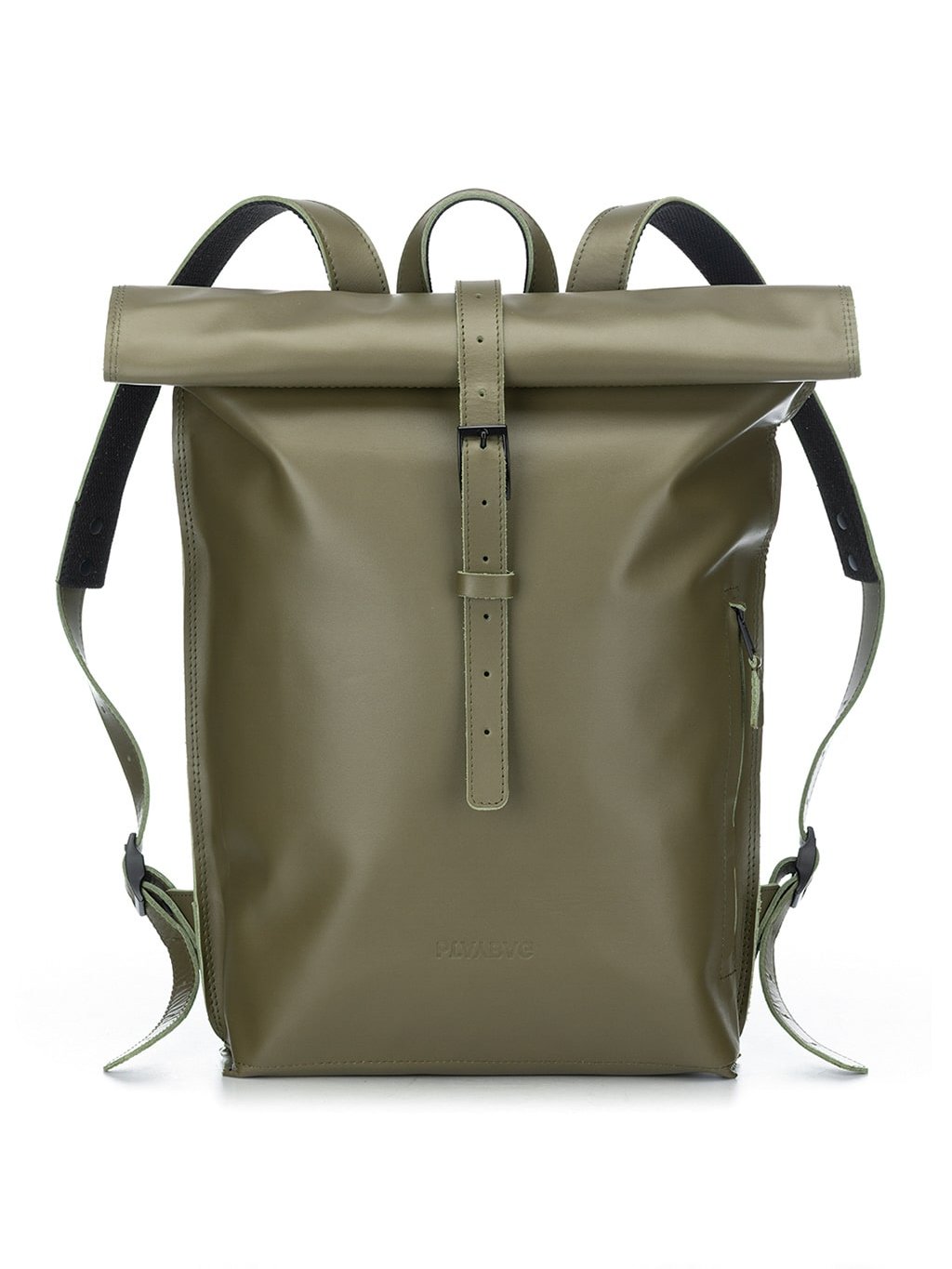
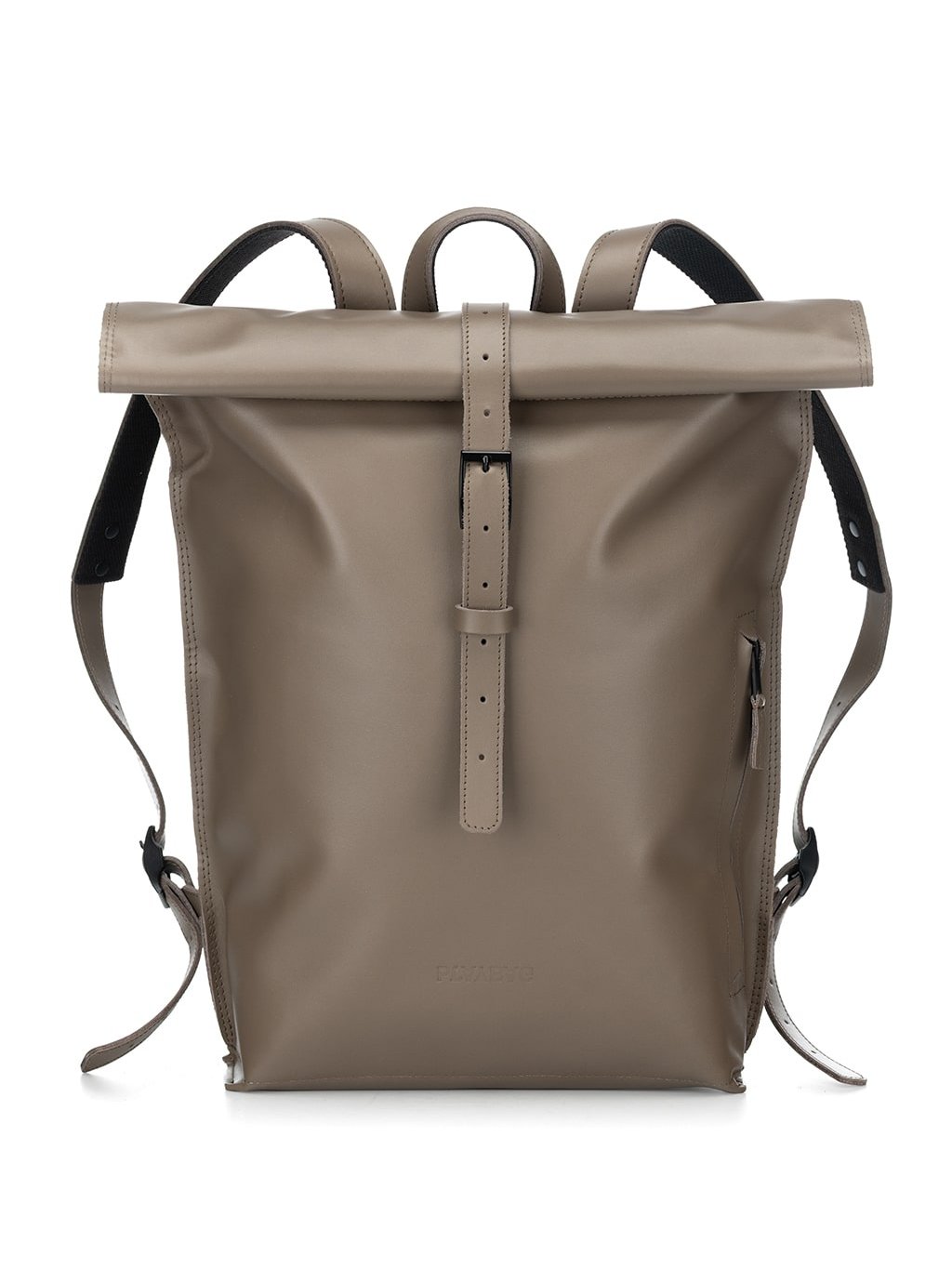
Genuine full-grain cowhide leather (pieno fiore) from an Italian tannery in five colors: Caramel, Grey, Olive Green, Taupe, and Taupe Light. Semi-aniline finish, European-sourced raw materials.

“In appearance, hand, and technical properties, Libra is very similar to both Lush and Resina. The average customer wouldn't tell them apart when carrying or touching them. The reason we work with several tanneries is our effort to offer you the intended range of colors in leathers of the same quality and properties.”

— Jan Boruta, Co-founder & CEO Playbag

Key specifications

Click a row for an explanation.

Raw materialCowhide leather
Our choice
  • Cowhide leather
Other options we don't use for Libra
  • Sheepskin leather
  • Calfskin leather
  • Goatskin leather

Cowhide leather has enough thickness and strength for a backpack that carries a laptop, books, a water bottle, and the usual daily chaos. Finer leathers can be beautiful on handbags or garments, but a city backpack also needs durability.

Origin of raw materialsEuropean
Our choice
  • European
Other options we don't use for Libra
  • South American
  • Asian
  • African

European origin means better traceability and stricter standards for the source of the raw material.

Leather typeGenuine grain (pieno fiore)
Our choice
  • Genuine grain — pieno fiore / full-grain
Other options we don't use for Libra
  • Corrected grain
  • Split leather
  • Reconstituted / bonded leather
  • PU “leather” — plastic on a textile backing

Genuine grain leather is the top layer of the hide with its natural grain. It doesn't pretend to be perfect. That's exactly where its value lies: the pores, subtle variations, and living surface aren't a flaw, but proof of the material.

Corrected grain leather has its surface unified by sanding and a final finish. It can look very clean, but part of the natural grain is lost in the process.

Split leather is the lower layer separated from the grain.

Reconstituted, or bonded, leather — often labeled bonded leather — is a mix of leather scraps and a binder. It looks like leather, but its lifespan comes nowhere near genuine grain leather.

PU “leather” isn't genuine leather at all.

Thickness1.4–1.5 mm

A thickness that works well for the firmer backpack parts and for holding its shape.

Hide size1.8–2.2 m²

Individual hides average 19–24 sf, roughly 1.8–2.2 m². On the finished backpack you only see the final shape, but the choice of the right part of the hide is decided long before stitching begins.

TanningChrome
Our choice
  • Chrome tanning
Other options we don't use for Libra
  • Vegetable tanning
  • Combination tanning

Tanning is the process that turns a raw hide into a durable material. Chrome tanning gives leather softness, stability, and better usability for everyday wear. For a city backpack meant to be comfortable, flexible, and practical, chrome tanning is the logical choice.

DyeingThrough-dyed

Dyed through means the color isn't only on the surface. The leather is dyed across its full thickness, so everyday wear at an edge won't reveal a lighter interior.

Surface finishSemi-aniline
Our choice
  • Semi-aniline
Other options we don't use for Libra
  • Aniline
  • Pigmented

Aniline leather is the most natural, but also the most delicate. Pigmented leather is the most resistant, but often looks flat/artificial.

Semi-aniline is a good compromise: it lets the grain of the leather show through, but adds a thin protective layer for everyday life.

Aniline is a type of transparent dye. It doesn't cover the leather like wall paint; rather, it dyes it and lets its natural structure stand out. That's why aniline leathers look vivid, but pick up stains more easily.

Pigmentation is a covering layer with a colored pigment. It can even out the surface and increase resistance, but when there's too much of it the leather starts to look flat, closed off, and sometimes even plasticky. A semi-aniline finish sits between these two worlds: it protects, but doesn't hide.

HandSoft, velvety

Libra has a quiet, warm surface with no plasticky sheen. It's exactly the kind of leather where it makes sense to talk about the hand, not just the color.

Supplier certifications

For Libra, we want to separate two things: the technical data sheet for this specific leather, which we're still adding, and the tannery's certification, which we can already document.

PDF Conceria Libra — LWG certificate (Gold Rated)
Official document from the Leather Working Group certification authority.
  • Leather Working Group — Gold Rated. The tannery states LWG Gold certification as the highest internationally recognized level for its processes.
  • Quality, environmental, safety, and ethics policy. Libra publicly describes an integrated approach to quality, sustainability, and process control.

Care recommendations

  • Don't leave the backpack in direct sunlight for long periods.
  • Don't dry it on a radiator, with a hair dryer, or near any other heat source.
  • For routine cleaning, a slightly damp cloth is all you need.
  • Wipe a stain away with a clean sponge or cloth. Don't rub hard.
  • Twice a year, we recommend a colorless cream for smooth nappa leather.

Choose a backpack in Italian leather

Now you know what you'll be carrying on your back. Choose a Delfin made from leather that makes sense not only at first glance, but also after years of wear.

Grafický návrh vytvořil a nakódoval Shoptak.cz